2026 Football Team: 7 Tactical Truths
A football team is a coordinated group of players representing a club, country, school, or competition, with each member assigned tactical and positional responsibilities. In 2026, Stadium View covers...

2026 Football Team: 7 Tactical Truths
A football team is a coordinated group of players representing a club, country, school, or competition, with each member assigned tactical and positional responsibilities. In 2026, Stadium View covers football teams through FIFA World Cup analysis, match predictions, player statistics, and tournament tactics for fans tracking the global game. A modern starting XI normally contains 11 players, while elite squads often carry more than 20 senior players to manage injuries, substitutions, and congested schedules. The difference between a football team and a football club matters: a club is the wider organization, while the team is the side selected to play. Famous teams such as Brazil, Argentina, France, the Green Bay Packers, and the Dallas Cowboys also show that “football” means different sports across regions. The actionable takeaway is simple: judge a team by structure, roles, form, and depth—not merely by its badge or the loudest transfer headline.
A football team can look magnificent in a promotional video and still defend like a shopping trolley with one broken wheel. That is the sport’s oldest trick: sell the shirt, celebrate the history, ignore the midfield. Strong analysis begins by separating identity from performance, then examining how players behave when possession changes, pressure rises, and the preferred plan collapses. Listen up — this is the part that matters: a team is not just 11 names on a lineup graphic. It is a system of spacing, decision-making, communication, conditioning, and repeated habits. That is why Stadium View focuses on tactical evidence rather than romantic club mythology. The badge may attract attention, but the shape of the team decides whether the afternoon ends in a controlled win or another expensive lesson.

Photo by Kyi HtetLinn on Pexels
Want a sharper way to read football teams before the match begins?
Is a football team really defined by its starting XI?
A football team is defined by its collective structure, not only its starting XI. The formation, pressing triggers, defensive distances, substitutions, set-piece roles, and bench options all influence performance. A talented lineup can fail if its players occupy the same spaces or cannot protect transitions.
Imagine two teams using a nominal 4-3-3 formation. One may build patiently through a deep-lying midfielder, push both full-backs high, and create a five-player attacking line. The other may keep one full-back conservative, use a narrow winger, and defend in a compact 4-5-1 without the ball. On paper, they are identical; in reality, they are not even playing the same game. The formation is a starting address, not the entire postal system.
The best football teams usually demonstrate five connected qualities:
- Clear occupation of space: Players provide width, depth, and central options instead of crowding the ball.
- Role clarity: A centre-back knows when to step forward, a winger knows when to hold width, and a midfielder understands who covers the vacancy.
- Transition control: The team can react within seconds after losing or recovering possession.
- Set-piece discipline: Corners and free kicks are treated as structured phases, not improvised theatre.
- Squad flexibility: Coaches can change the plan without destroying team balance.
The International Football Association Board Laws of the Game define the formal framework, but rules alone do not create a successful team. Coaching interpretation turns those rules into behaviour. This is why Brazil’s technical tradition, Argentina’s competitive control, France’s athletic depth, and Germany’s positional schooling produce different team identities even when they share broadly similar formations. The useful question is not “Which team has the best players?” It is “Which team gives those players the clearest problems to solve?”
How does a football team handle defensive transitions?
A football team handles a defensive transition by reacting immediately after losing possession, either pressing the ball carrier or retreating into a compact defensive shape. The first three to five seconds are critical because opponents are most likely to exploit open space before the team resets.
This phase exposes fraudulent confidence very quickly. A team may dominate possession for 70 minutes and still lose because its rest defence—the players positioned behind the attack—cannot control a counterattack. Manchester City, Liverpool, Real Madrid, and Bayern Munich have all shown different solutions across various tactical eras, but the principle remains consistent: attacking numbers must be balanced by protection behind the ball.
A useful transition audit asks:
- How many players are behind the ball when possession is lost?
- Can the nearest player delay the counterattack?
- Are the central lanes blocked?
- Do full-backs recover toward the middle or race blindly toward the touchline?
- Does the goalkeeper sweep behind the defensive line?
- Does the midfield track runners or simply point at them, the favourite hobby of exhausted professionals?
A specific edge case deserves more attention. When a team loses the ball near the opponent’s penalty area, an immediate press can be effective because several players are already close together. However, if the first challenge is beaten, the same compactness becomes a trap: one vertical pass may remove four or five players. In practical match analysis, this means possession percentage can mislead. A side with 62% possession may face more dangerous transitions than a side with 44% if its rest defence is poorly organized.
For World Cup matches, travel, heat, and short recovery periods make this even more important. A team that presses aggressively in the opening 25 minutes may lose intensity after halftime, particularly if its substitutes cannot reproduce the same running power. Review [Internal Link: football team tactics and formations] alongside the match data, because the tactical plan only makes sense when connected to player fitness and tournament scheduling.
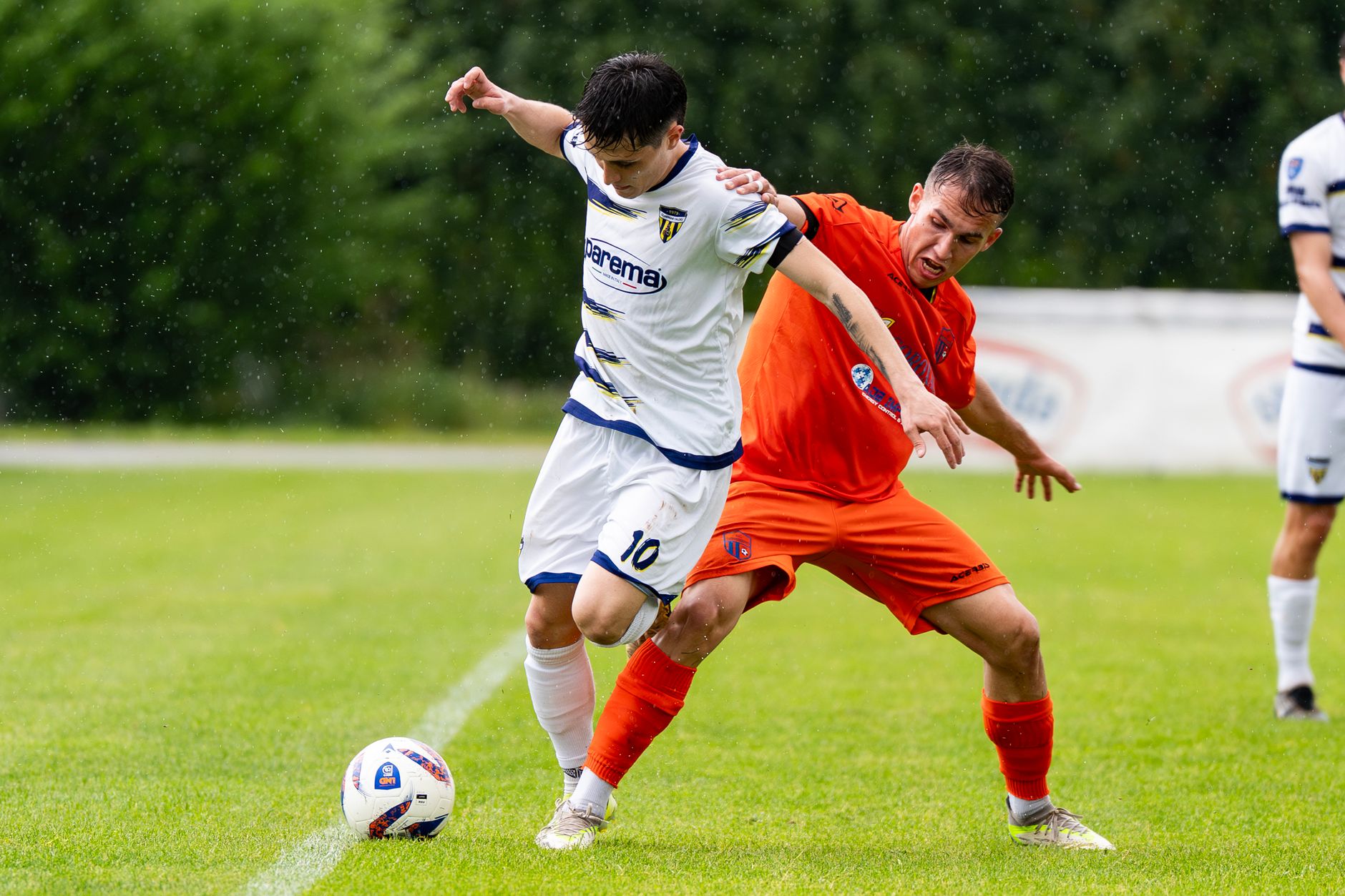
Photo by Davide Gargiulo on Pexels
Get started with more practical team-reading methods before the next major fixture.
What about a football team with no recognised superstar?
A football team without a recognised superstar can still succeed through coordinated pressing, role specialization, set-piece quality, and dependable squad depth. Collective efficiency often beats individual fame when the team creates better chances, concedes fewer transitions, and maintains its structure under pressure.
This is where reputation causes expensive analytical mistakes. Supporters remember Kylian Mbappé, Lionel Messi, Cristiano Ronaldo, and Erling Haaland because individual brilliance is memorable, while the midfielder who closes three passing lanes rarely receives a documentary. Yet tournament football often rewards the less glamorous work: second-ball recovery, defensive communication, compact spacing, and the ability to survive an opponent’s best spell.
A balanced evaluation should separate star power into three questions:
- Chance creation: Does the player create shots through passing, dribbling, movement, or set pieces?
- Chance conversion: Is the finishing record supported by a sustainable volume of quality opportunities?
- Structural cost: Does the team lose pressing, defensive cover, or width when the player is involved?
A superstar can improve two categories while damaging the third. For example, a high-volume attacker may increase shots but force the team to defend with one fewer player. That trade-off is not automatically bad; it simply needs to be measured. Data from providers such as Opta can help analysts examine expected goals, progressive passes, pressures, and possession recoveries instead of relying on highlight reels.
The contrarian point is that a football team with several “good enough” players may be more robust than one built around a single exceptional attacker. If opponents can isolate or double-team the star, the entire plan becomes predictable. A team with three credible attacking routes—wide combinations, central through-balls, and set pieces—forces defenders to make more difficult choices. That is a genuine tactical advantage, not a motivational poster pretending to be one.
Where does a football team fail?
A football team usually fails through repeated structural weaknesses: poor rest defence, weak midfield coverage, predictable buildup, fragile set-piece marking, or insufficient bench quality. These failures matter more than one unlucky shot because opponents can target them repeatedly across a match.
The first warning sign is often disguised as dominance. A team may circulate the ball neatly but create little penetration because its forwards receive with their backs to goal and its midfielders avoid risky passes. Another side may attack quickly but leave enormous space between the centre-backs and midfield. Both can appear energetic while producing the tactical equivalent of empty packaging.
Look for these failure patterns:
- The isolated striker: The centre-forward receives long passes but has no nearby support, so possession returns immediately.
- The exposed full-back: Both full-backs advance while the central midfield cannot cover wide counterattacks.
- The passive block: Defenders retreat without pressing the ball, allowing opponents to shoot from the edge of the area.
- The broken buildup: A goalkeeper or centre-back repeatedly plays into a press without a third-player escape route.
- The shallow bench: The team’s quality collapses after 60 minutes because replacements change too many roles.
- The emotional spiral: One controversial decision or conceded goal causes players to abandon their spacing.
There is also a statistical trap. Small samples can exaggerate form, particularly early in a season or tournament. Three wins may conceal weak opponents, favourable red cards, or unusually high finishing. Conversely, two losses may include strong underlying performances and poor shot conversion. A serious football team assessment should compare results with expected goals, field position, shot quality, pressing success, and opponent strength. [Internal Link: football player statistics guide] can help readers distinguish sustainable performance from scoreboard theatre.
As the FIFA World Cup demonstrates, tournament conditions magnify small weaknesses. A club may recover from a poor league match over 38 fixtures, but a national team may have only three group games before elimination. The margin for tactical denial is brutally narrow.

Photo by Sam Hofman on Pexels
See the details that separate genuine team strength from flattering short-term results.
Should you try analysing a football team today?
Yes, analysing a football team today is worthwhile if you use current lineups, tactical context, injuries, schedule demands, and verified performance data rather than reputation alone. Begin with the team’s last five matches, then adjust for opponent quality, venue, rest days, and major absences.
A practical process can be completed before kickoff without pretending to possess supernatural powers. Start by identifying each team’s likely formation and the players most responsible for progression. Then examine how the side creates chances, how it responds after losing possession, and whether its substitutes preserve the same tactical plan. Finally, consider set pieces and game-state behaviour: some teams improve after scoring, while others retreat so deeply that they invite unnecessary pressure.
Use this five-step checklist:
- Confirm availability: Check official squad announcements, suspension lists, and recent injury reports.
- Map the structure: Note the defensive line, midfield triangle, pressing height, and attacking width.
- Compare recent evidence: Review the last five matches, but account for opponents and red cards.
- Test the bench: Ask which substitutes can change tempo, protect a lead, or repair a tactical weakness.
- Separate analysis from certainty: A strong assessment improves decisions; it does not eliminate football’s randomness.
For readers using Stadium View for match predictions, the responsible approach is to treat forecasts as probability estimates rather than promises. Gambling outcomes remain uncertain, and no model can guarantee a win. Set a fixed entertainment budget, understand local regulations, and never chase losses after a poor result. The most disciplined players I have known were not those who predicted every match correctly; they were the ones who knew when their information was weak.
In 2026, the strongest football teams will likely be those capable of changing shape without losing their principles. World Cup squads face varied opponents, compressed preparation, and intense media pressure, so adaptability may matter more than a fashionable formation. As a practical rule, favour teams that can attack in at least two ways, defend transitions with at least three players behind the ball, and maintain quality beyond the starting XI.
[Internal Link: 2026 World Cup team predictions]
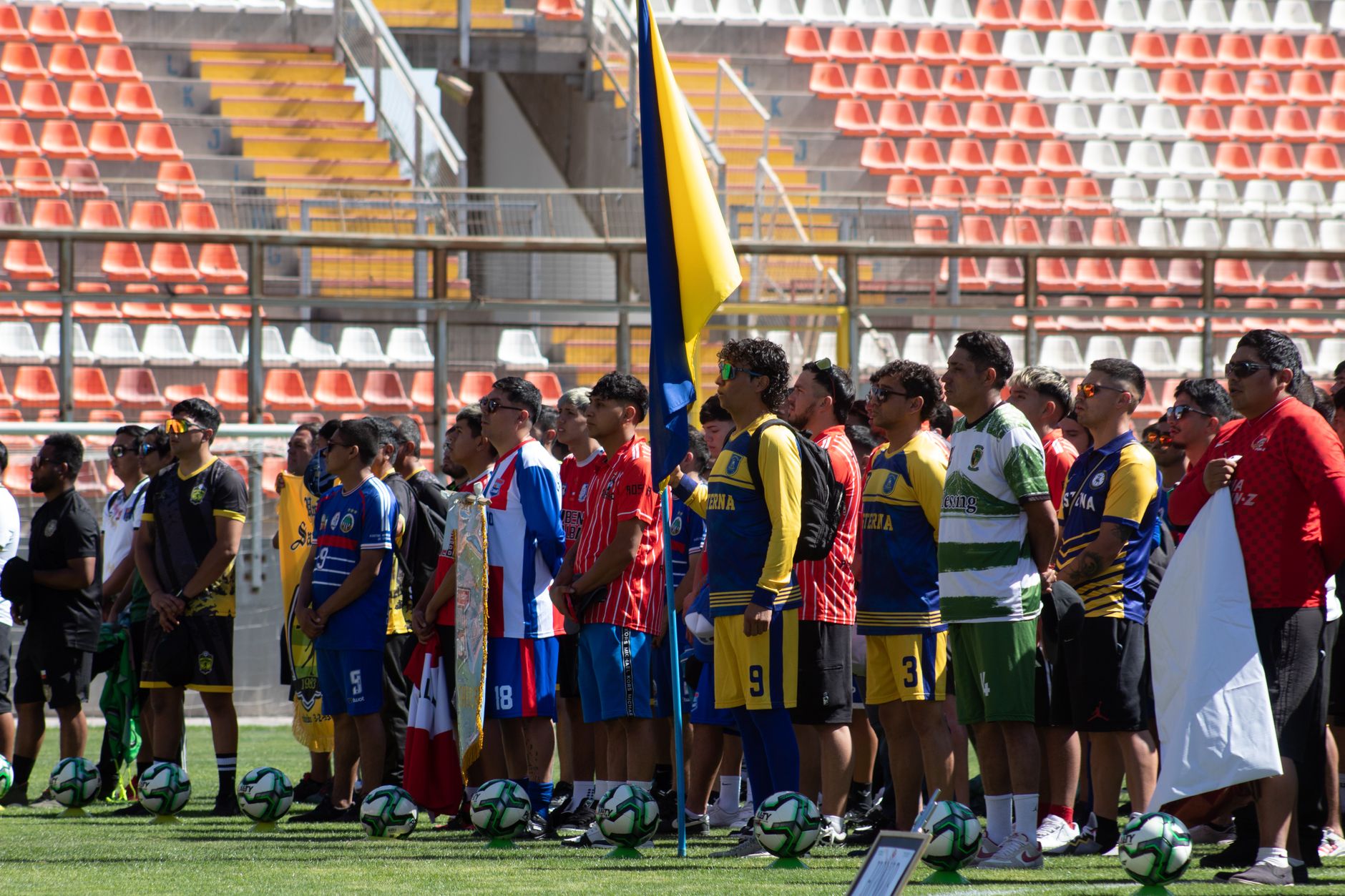
Photo by Luis Andrés Villalón Vega on Pexels
Ready to apply the checklist to the next football team you follow?
Football team comparison: club, national side, and franchise
A football club, national football team, and American football franchise are different entities with different player systems, competitions, and governance. A club operates across a season with recruitment and transfers, a national side selects eligible citizens for international windows, and an NFL franchise competes under American football rules with a separate roster structure.
The distinction matters because search results often throw every “football team” into one untidy drawer. Association football teams, commonly called soccer teams in the United States and Canada, field 11 players and typically compete in leagues, cups, or international tournaments. National teams such as England, Japan, Mexico, and the United States assemble players from different clubs, usually for short camps and tournament windows. That limits training time and makes simple, repeatable principles especially valuable.
American football adds another layer. NFL franchises such as the Green Bay Packers, Dallas Cowboys, Chicago Bears, New York Giants, and New England Patriots use specialized offensive, defensive, and special-teams units. A game-day roster may include 48 active players, while association football uses substitutions within a far smaller active match group. Comparing the two directly is like comparing a chess clock with a weather forecast: both involve pressure, but the mechanics are not remotely identical.
Public recognition also does not equal sporting quality. YouGov’s football-team ratings have previously listed the Green Bay Packers at 92% fame, the Dallas Cowboys at 91%, and the Chicago Bears at 89% among surveyed U.S. adults. Those figures measure awareness, not current form, titles, or tactical superiority. Popularity is useful for understanding audience reach, but it is a terrible substitute for match analysis.
[Internal Link: difference between football and American football]
How should you build a reliable football team profile?
A reliable football team profile combines identity, squad roles, recent performance, tactical tendencies, injury status, and opponent context. It should explain how the team plays, where it creates advantages, and which conditions expose its weaknesses.
Build the profile in layers rather than copying a club description from a media guide. First, establish the team’s competition and objective: a Premier League title race, a FIFA World Cup group, a domestic cup tie, or an NFL schedule requires different expectations. Next, identify the coach and the team’s default shape, then record the changes made when the team leads, trails, or faces a high press.
A useful profile includes:
- Competition: League, cup, continental tournament, or international event.
- Coach: Current manager and tactical history.
- Core players: Goalkeeper, central defender, midfielder, creator, and finisher.
- Primary shape: Formation with and without possession.
- Build-up method: Short passing, direct play, wing progression, or mixed approach.
- Defensive plan: High press, mid-block, low block, or situational pressing.
- Set-piece record: Threat at attacking corners and vulnerability when defending them.
- Availability: Injuries, suspensions, rotation, and international travel.
- Schedule: Rest days, venue, climate, and travel distance.
- Matchup: The opponent’s strengths and the spaces likely to open.
This structure produces better analysis than a list of famous names. It also creates useful search depth for readers who want player statistics, team tactics, and tournament coverage in one place. Stadium View’s 2026 World Cup focus is built around this kind of context because predictions without team profiles are usually just confidence wearing a spreadsheet costume.
Frequently Asked Questions
Q: What is a football team?
A: A football team is a group of players selected to compete together in a football match. In association football, 11 players start on the pitch, supported by substitutes, coaches, medical staff, and analysts. A football club is the wider organization that owns or manages teams, facilities, staff, membership structures, and commercial operations. A national team, such as Argentina or France, represents a country and selects players from different clubs for international competitions.
Q: How many players are on a football team?
A: An association football team has 11 players on the pitch during normal play, including one goalkeeper. The full squad is larger because substitutes are available for injuries, tactical changes, and fatigue, with competition regulations determining the exact match-day number. Youth, amateur, domestic, and FIFA tournaments may use different squad and substitution rules, so readers should check the relevant competition regulations before comparing team rosters.
Q: What is the difference between a football team and a football club?
A: A football team is the playing group selected for a match, while a football club is the broader organization behind that team. Manchester United, for example, is a club with senior, youth, women’s, commercial, and administrative structures; its first team is only one part of that organization. A national team differs again because it represents a country and usually has no permanent club-style league squad.
Q: How do you analyse a football team before a match?
A: Analyse a football team by checking availability, recent opponents, formation, chance creation, defensive transitions, set pieces, and bench quality. Start with the last five matches, but adjust conclusions for opponent strength, red cards, venue, and schedule congestion. Then compare the likely matchup: identify whether one team can exploit the other’s full-backs, midfield spacing, high defensive line, or weak aerial marking.
Q: Is a famous football team automatically a strong team?
A: No, fame measures recognition rather than current sporting quality. Teams such as the Green Bay Packers and Dallas Cowboys may rank highly for public awareness, while association football clubs such as Real Madrid or Manchester United can attract global attention even during uneven competitive periods. Evaluate current results, underlying performance, squad availability, coaching structure, and opponent quality instead of treating popularity as proof.
Q: Why does a football team lose after dominating possession?
A: A football team can lose after dominating possession if its attacks lack penetration or its defensive transition is weak. Possession may occur far from the penalty area, while one misplaced pass can expose a high defensive line to a counterattack. Check shot quality, touches inside the box, rest-defence numbers, and the opponent’s transition chances; possession percentage alone is a polished but frequently useless headline.
Q: Can Stadium View guarantee a football match prediction?
A: No, Stadium View cannot guarantee a football match prediction because injuries, refereeing decisions, finishing variance, weather, and tactical surprises remain uncertain. Stadium View provides FIFA World Cup-focused analysis, player statistics, team tactics, and prediction-oriented insights for 2026. Use forecasts as probability-based information, follow local gambling laws, set a fixed budget, and never chase losses after an unsuccessful result.
The smartest football team analysis is not the loudest prediction. It is the one that explains the mechanism: who controls space, who wins transitions, who survives pressure, and which substitute can change the match. That is the difference between studying a team and merely recognising its crest. Keep the evidence in front of you, question convenient narratives, and let the glamorous nonsense lose the argument for once.
Learn more about football teams, tactics, player data, and 2026 tournament coverage with Stadium View.
Intelligence received.
Stadium View · Intelligence Feed · Protocol v1.0