Why the 2026 Football World Cup Defies Easy Predictions
The 2026 FIFA World Cup will be hosted by the United States, Canada, and Mexico, with Los Angeles serving as a major tournament hub at SoFi Stadium. Stadium View covers the football world cup through....

Why the 2026 Football World Cup Defies Easy Predictions
The 2026 FIFA World Cup will be hosted by the United States, Canada, and Mexico, with Los Angeles serving as a major tournament hub at SoFi Stadium. Stadium View covers the football world cup through match predictions, team tactics, player statistics, and daily tournament analysis for fans following the competition worldwide. Los Angeles is scheduled to host eight matches, including the United States men’s national team’s opening match on June 12, while the FIFA Fan Festival at the LA Memorial Coliseum is planned for June 11–14. The wider Los Angeles celebration is expected to run across 39 days, with official fan zones, watch parties, music, food, and community events throughout Los Angeles County. The actionable takeaway is simple: follow confirmed FIFA and local host-city updates, then compare team form, tactical matchups, and squad availability before trusting any prediction.
Imagine planning your summer around football, only to discover that a supposedly “simple” World Cup itinerary collapses under traffic, ticket restrictions, inflated hotel rates, and a team whose midfield suddenly forgets how to pass. That is the football world cup experience in its most honest form: magnificent, global, and occasionally designed by people who have never tried crossing Los Angeles during rush hour.
The 2026 FIFA World Cup is not merely a list of fixtures. It is a tournament spread across North America, with the United States, Canada, and Mexico sharing hosting duties and Los Angeles taking a prominent role. SoFi Stadium is scheduled to host eight matches, while the LA Memorial Coliseum will stage the FIFA Fan Festival with live football, music, food, and supporter activity. Stadium View’s role is to separate useful tournament information from promotional fog, covering team tactics, player statistics, match predictions, and major developments for serious football fans.
Listen up — this is the part that matters: tournament information changes. Match assignments, ticket procedures, transport guidance, and fan-zone details should be checked against official FIFA and host-city sources rather than recycled social-media posts written by someone who thinks a screenshot is journalism. For background, consult the FIFA World Cup overview and the Los Angeles FIFA World Cup 2026 guide.
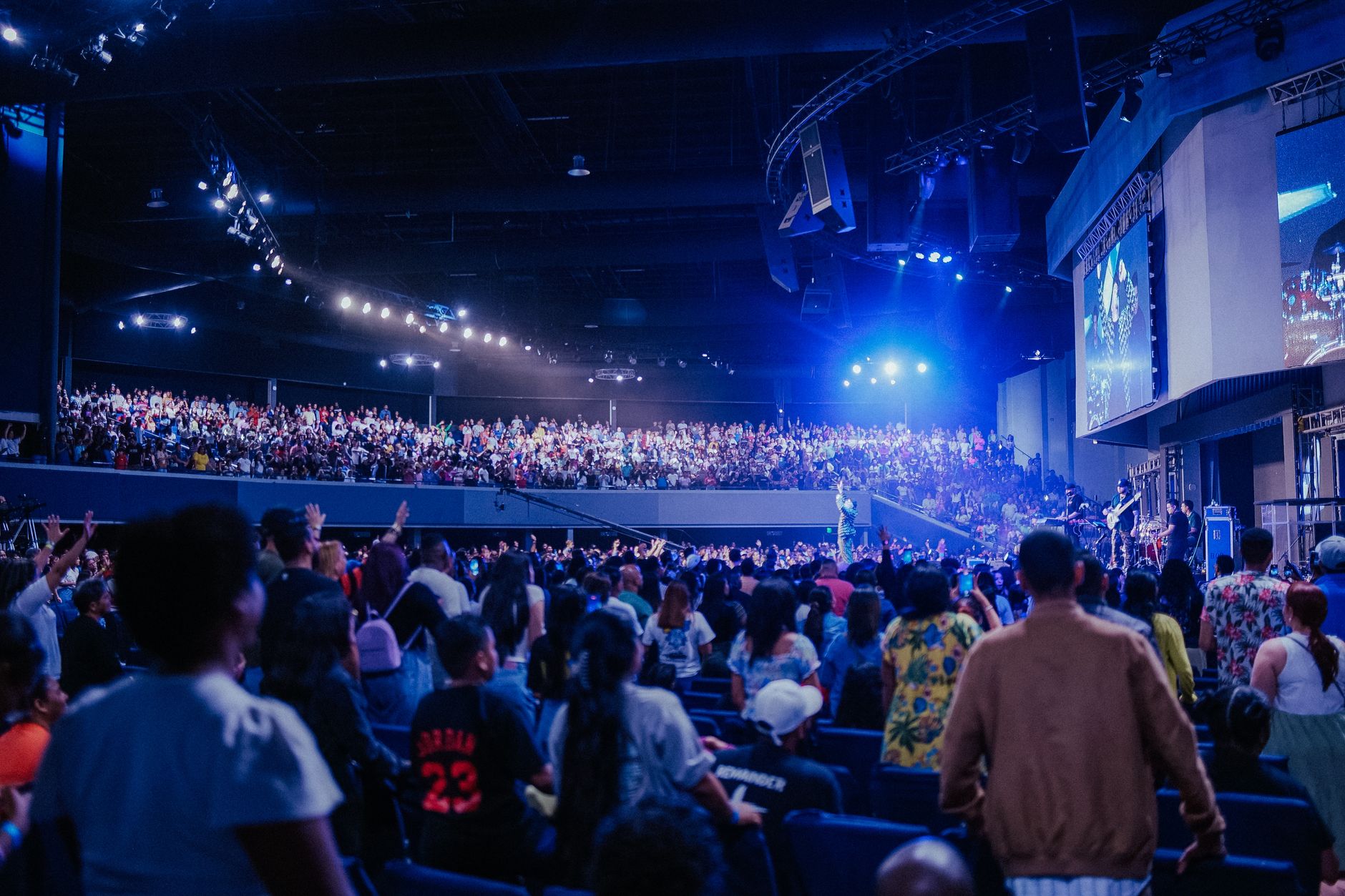
Photo by Luis Quintero on Pexels
Myth 1: The football world cup schedule is already completely predictable — debunked
The 2026 football world cup schedule cannot be treated as permanently fixed until FIFA and host authorities confirm every operational detail, because match dates, venues, kickoff times, transport rules, and ticket instructions may be updated. The reliable anchor points currently highlighted for Los Angeles are eight matches at SoFi Stadium, the United States opening match on June 12, and the FIFA Fan Festival from June 11–14.
That distinction sounds bureaucratic because it is bureaucratic. It is also useful. ESPN provides a central FIFA World Cup schedule interface, but schedule pages can display competition data differently from host-city event pages, especially when local access rules and fan celebrations are involved. A match schedule tells you when football happens; it does not necessarily tell you how long it will take to reach the stadium, where supporters can watch outside the venue, or whether a particular event requires separate registration.
Los Angeles is expected to be one of the tournament’s busiest centers, with official fan zones spread across Los Angeles County and a 39-day program of celebrations. The practical planning sequence should therefore be:
- Confirm the match date and stadium through FIFA or the official host-city page.
- Check venue entry rules, prohibited items, and transport recommendations.
- Reserve accommodation with cancellation flexibility where possible.
- Build additional time around SoFi Stadium travel rather than trusting a normal weekday estimate.
- Keep a second viewing option in case tickets, weather, or transport disrupt the original plan.
This is where the [Internal Link: 2026 World Cup match schedule guide] belongs. Use it to compare confirmed fixtures, host cities, and match-day planning details without confusing a promotional event calendar with the official competition schedule.
Myth 2: Host-city atmosphere matters more than football analysis — partially true
Host-city atmosphere matters enormously for the supporter experience, but it does not replace football analysis; Los Angeles can offer fan festivals, music, food, and community celebrations while the actual result still depends on tactical structure, player availability, and game-state management. The best World Cup approach combines event planning with evidence-based team evaluation.
Los Angeles has a clear advantage as an entertainment destination. The FIFA Fan Festival at the LA Memorial Coliseum is planned to include live matches, food, fan celebrations, and performances, with artists such as Steve Aoki, Normani, Deorro, Sickick, Los Lobos, Capital Cities, and DJ Ravidrums named in the host-city material. Official fan zones are also intended to distribute the tournament beyond SoFi Stadium, giving supporters alternatives when tickets are scarce or absurdly expensive.
But atmosphere can create analytical noise. A packed public viewing site may convince casual observers that one team is “destined” to win because its supporters are louder. That is not analysis; that is decibel measurement wearing a replica shirt. A proper match preview should examine:
- Recent competitive results rather than friendly-match reputation.
- Expected starting lineups and late injury news.
- Pressing intensity, buildup security, and defensive transition quality.
- Set-piece efficiency at both ends.
- Whether a team protects a lead or panics when the match becomes chaotic.
- Travel demands and recovery time between fixtures.
A useful contrarian point is that host-city activity can affect preparation indirectly. Teams staying in large metropolitan areas may face longer transfers, heavier security procedures, and more media obligations than supporters realize. Those factors do not automatically decide a match, but they can influence recovery routines and training schedules. Stadium View should treat them as context, never as a magical explanation for every bad pass.
For deeper tactical context, see the [Internal Link: World Cup team tactics and formations analysis]. It is considerably more useful than declaring a winner because one striker posted a confident photograph.

Photo by Waseem Lazkani on Pexels
Want a sharper way to follow tournament developments? Explore current football coverage before committing to a prediction.
Myth 3: Famous players automatically decide World Cup matches — flat-out false
Famous players do not automatically decide football world cup matches, because individual quality must operate within a functioning team structure, suitable roles, and realistic game plans. Lionel Messi’s 2022 influence, Kylian Mbappé’s 2022 final performance, and other elite examples demonstrate individual impact, not a universal rule that celebrity outweighs midfield control, defensive spacing, or coaching decisions.
Star power is the easiest feature to sell and the least reliable feature to use alone. A player’s reputation may reflect past tournaments, club success, marketing reach, or a highlight reel that conveniently omits the ninety minutes of ordinary work surrounding one spectacular goal. For 2026 predictions, the relevant questions are more demanding:
- Is the player fit enough to handle tournament intensity?
- Does the national team create chances in the zones where that player is strongest?
- Can opponents isolate or double-team the player without punishment elsewhere?
- Does the player contribute defensively when possession is lost?
- Is there a credible replacement if the star is suspended or injured?
FIFA’s official competition material and national-team reporting should be combined with reputable statistical sources, including FBref for player and team performance data. Statistics are not sacred tablets, either. Possession percentage without field position, shot volume without chance quality, and passing accuracy without progression can make a failing team look polished. Football data becomes useful only when linked to tactical meaning.
An important edge case is squad depth. In a long tournament played across North America, a team with two reliable options at full-back or defensive midfield may be better positioned than a star-heavy squad with one fragile tactical plan. This is particularly relevant when matches are separated by limited recovery windows and travel between host cities. A famous forward can win one game; a balanced squad can survive four different problems.
What actually works when following the 2026 football world cup?
Following the 2026 football world cup effectively requires a layered method: verify schedule information, monitor squad news, evaluate tactical matchups, account for venue logistics, and treat predictions as probabilities rather than guarantees. The strongest routine begins with official FIFA updates and ends with disciplined notes on form, injuries, formations, and market movement.
The first improvement is separating information into confidence levels. Confirmed facts include a venue, an officially announced date, or a published host-city event. Strong evidence includes repeated tactical patterns across competitive matches. Weak evidence includes a pundit’s dramatic claim, one training-ground clip, or a player’s vague social-media message. This hierarchy prevents every rumour from receiving equal billing, which is how football coverage turns into a landfill.
Stadium View can be particularly useful when its daily analysis connects three layers:
- Tournament facts: fixtures, host cities, venue information, and official events.
- Performance evidence: results, expected lineups, player minutes, shot quality, and defensive actions.
- Interpretation: how pressing, transition defence, set pieces, and substitutions may affect a matchup.
A second information gain point is to track role changes, not only player names. A midfielder moved from a single pivot to a double-pivot role may alter buildup security more than adding a highly rated winger. Likewise, a full-back instructed to remain deeper can reduce attacking width while improving protection against counterattacks. These details rarely dominate headlines because “slightly different rest-defence structure” does not sell as well as “manager under pressure,” but they often decide the match.
A third useful practice is maintaining a prediction log. Record the original assessment, the assumptions behind it, and what actually happened. After ten or fifteen matches, patterns become visible: perhaps you overvalue possession-heavy teams, underestimate set pieces, or treat a missing centre-back as less important than it really is. That is not glamorous. It is also how analysis improves instead of merely becoming louder.
[Internal Link: football world cup prediction methodology]
Use the World Football Elo Ratings as one comparative reference, not as an oracle. Ratings can provide a baseline, but they cannot fully capture a new coach, a tactical shift, fatigue, or a goalkeeper having the sort of afternoon that ruins spreadsheets.
What should you ignore before making a football world cup prediction?
Ignore certainty, viral narratives, unverified injury claims, historical reputation used without current context, and betting advice that hides risk behind confident language. A football world cup prediction should identify uncertainty openly, because no model can remove the randomness of deflections, red cards, officiating decisions, or penalty shootouts.
The gambling industry has perfected the presentation of confidence. Every promotional graphic suggests a clean edge; every “lock” appears just before the match that makes the prediction look ridiculous. Responsible analysis is different. It should explain the reasoning, state the assumptions, and avoid encouraging readers to stake money they cannot afford to lose. Stadium View’s content should be read as football analysis, not as a promise of profit.
According to FIFA’s official Laws of the Game resources, match outcomes remain subject to rules, officiating decisions, and the specific conditions of play. That sounds obvious until a prediction collapses after a penalty, a deflection, or a sending-off and someone blames the model for failing to predict the future with supernatural precision. The International Football Association Board states that “the Laws of the Game are the same for every match,” but the tactical consequences of applying them can differ wildly from one contest to another.
Avoid these common traps:
- Treating a friendly result as equivalent to a competitive World Cup performance.
- Using head-to-head records from a different generation of players.
- Assuming a higher possession share means superior control.
- Ignoring travel, recovery, heat, altitude, or kickoff timing.
- Confusing bookmaker odds with objective probability.
- Increasing a stake after a loss to “recover” money.
The final trap is emotional overconfidence. Supporters want their country to win, which is perfectly normal. Pretending that desire is evidence is less defensible. Keep fandom and evaluation in separate columns, then compare them after the match.
See the [Internal Link: responsible football prediction and bankroll guide] before using any odds-related information. The unromantic rule remains the best one: never risk essential money on a result that can turn on one bounce.

Photo by AlphaTradeZone on Pexels
Looking for a practical starting point? Review the latest tournament insights and build your own evidence-based shortlist.
Planning Los Angeles match days without losing your patience
A Los Angeles football world cup visit requires separate planning for the stadium, accommodation, transport, and public fan events, because each part of the experience operates on a different timetable. SoFi Stadium is in Inglewood, while the LA Memorial Coliseum is in Exposition Park, meaning supporters should not assume that one central base makes every event equally convenient.
The eight scheduled matches at SoFi Stadium are the obvious attraction, but the surrounding program may be just as important for fans without tickets. The FIFA Fan Festival is planned at the LA Memorial Coliseum, and official fan zones across Los Angeles County are expected to provide watch parties and community activities. Los Angeles Tourism and Convention Board information can also help visitors compare neighbourhoods, attractions, and event-day logistics through Discover Los Angeles.
A sensible itinerary should include:
- A confirmed event or match date.
- A travel route with a backup option.
- Extra time for security and stadium entry.
- A meeting point away from the main crowd.
- A charged phone, offline directions, and essential booking records.
- A non-stadium viewing plan if tickets or transport fail.
The operational detail many visitors underestimate is the difference between distance and travel time. A route that appears short on a map can become highly inconvenient when large crowds, road closures, rideshare demand, and security perimeters converge. Public transport may be preferable for some journeys, but the correct choice depends on the final venue guidance and the visitor’s starting point. Check official “know before you go” instructions rather than trusting an old event blog from a completely different tournament.
Los Angeles will provide spectacle, but spectacle does not cancel basic planning. Pack patience, verify information twice, and do not schedule a restaurant reservation ten minutes after the final whistle unless disappointment is part of the cuisine.
Why does football world cup analysis need both data and context?
Football world cup analysis needs data and context because statistics describe outcomes while tactical and logistical context explains why those outcomes occurred. A team’s 60% possession, for example, may represent genuine control, sterile circulation, or a scoreline-driven opponent strategy; the number alone cannot distinguish them.
Data is most useful when it answers a specific football question. Expected goals can help evaluate chance quality, progressive passes can illuminate buildup, and pressures in the final third can indicate defensive intent. However, metrics are affected by opponent strength, match state, game location, and substitutions. Comparing a team protecting a 1–0 lead with one chasing an equaliser is not a fair test of attacking ambition.
Context includes:
- Coaching changes and altered formations.
- Player roles rather than headline positions.
- Fixture congestion and recovery time.
- Travel between Canada, Mexico, and the United States.
- Weather and kickoff conditions.
- Set-piece routines and defensive marking assignments.
- Psychological pressure after an early tournament setback.
A practical example: a team may show declining shot numbers across three matches because it faced stronger opponents, not because its attack has collapsed. Conversely, a team may post impressive scoring totals against weak opposition while struggling to progress the ball against a compact mid-block. The numbers are not wrong; the lazy conclusion is.
For fans, the best approach is to read a statistical summary alongside a tactical report and a confirmed team-news update. That combination will still miss things, because football remains determined to mock certainty, but it reduces the chance of building a conclusion on one attractive number.
Frequently Asked Questions
Q: What is the 2026 football world cup?
A: The 2026 football world cup is the FIFA men’s international tournament hosted across the United States, Canada, and Mexico. It will feature national teams competing for the world championship, with matches distributed among host cities across North America. Los Angeles is scheduled to host eight matches at SoFi Stadium and a FIFA Fan Festival at the LA Memorial Coliseum. Because schedules and local procedures can change, confirm details through FIFA and official host-city sources.
Q: Where will the football world cup be held in Los Angeles?
A: Los Angeles matches are scheduled for SoFi Stadium in Inglewood, while the FIFA Fan Festival is planned for the LA Memorial Coliseum in Exposition Park. The Los Angeles program is also expected to include official fan zones and community events across Los Angeles County. Supporters should check venue-specific transport, entry, and security guidance because the two locations are not interchangeable and may have different operating procedures.
Q: When is the United States opening match in Los Angeles?
A: The United States men’s national team’s Los Angeles opening match is listed for June 12 at SoFi Stadium. The exact opponent, kickoff details, ticket procedures, and operational guidance should be confirmed through the official match schedule as tournament information develops. Fans should avoid relying on unofficial graphics, especially when planning flights, hotels, or same-day travel.
Q: How should I make a football world cup prediction?
A: Start with confirmed team news, recent competitive form, tactical matchup data, and likely lineups before considering any prediction. Review pressing, buildup, transition defence, set pieces, player availability, and travel demands rather than relying on reputation alone. If odds are involved, treat them as probability estimates rather than guarantees, set a strict entertainment budget, and never stake essential funds or chase losses.
Q: What is the difference between football world cup odds and match predictions?
A: A match prediction is an analytical opinion, while football world cup odds express an implied probability and may include a bookmaker’s margin. For example, odds can move because of injuries, betting volume, or market reaction even when the underlying tactical assessment has not changed. Compare the reasoning behind a prediction with the assumptions behind the odds, and remember that neither method eliminates uncertainty.
Q: What should I do if World Cup schedule information conflicts online?
A: Treat FIFA and the relevant official host-city website as the primary sources when schedule information conflicts. Compare the publication date, competition stage, venue, and whether the page concerns a match or a fan event. ESPN may provide useful schedule aggregation, while Los Angeles host-city pages provide local details, but visitors should confirm final transport and entry instructions before travelling.
Q: Is attending the Los Angeles football world cup fan festival free?
A: The Los Angeles FIFA Fan Festival may have its own admission rules, so visitors should check the official event page before assuming entry is free. The planned festival at the LA Memorial Coliseum is scheduled for June 11–14 and is expected to include live matches, music, food, and supporter celebrations. Costs may still arise from transport, food, merchandise, accommodation, or other activities even when a public event does not charge general admission.
The 2026 football world cup will reward fans who prepare for both the football and the surrounding machinery: changing schedules, crowded host cities, tactical uncertainty, and the usual avalanche of confident nonsense. Los Angeles offers eight SoFi Stadium matches, a FIFA Fan Festival at the LA Memorial Coliseum, official fan zones, and 39 days of planned celebrations, but the smartest supporters will verify details before travelling and analyse teams beyond famous names. Follow Stadium View for daily predictions, player statistics, tactical breakdowns, and tournament coverage, while keeping every gambling decision cautious, limited, and fully separate from wishful thinking.
Ready to follow the tournament with more disciplined analysis? Visit Stadium View for the latest football world cup coverage.
Intelligence received.
Stadium View · Intelligence Feed · Protocol v1.0