Morocco National Team: What 4 World Cups Taught Me
Imagine watching Morocco’s national football team dismantle comfortable assumptions one counterattack at a time. Morocco represents the leading men’s football side of the Royal Moroccan Football Feder...

Morocco National Team: What 4 World Cups Taught Me
Imagine watching Morocco’s national football team dismantle comfortable assumptions one counterattack at a time. Morocco represents the leading men’s football side of the Royal Moroccan Football Federation, competing in CAF, FIFA World Cup, and Africa Cup of Nations tournaments from North Africa. Its defining modern achievement came at the 2022 FIFA World Cup in Qatar, where Morocco became the first African team to reach a World Cup semifinal. The Atlas Lions had previously qualified for five World Cups, including 1970, 1986, 1994, 1998, and 2018, before their historic 2022 run. Morocco also won the 1976 Africa Cup of Nations and reached the 1986 World Cup round of 16. The practical takeaway is simple: judge Morocco through defensive structure, transition speed, squad depth, and opponent quality—not noisy pre-tournament hype.
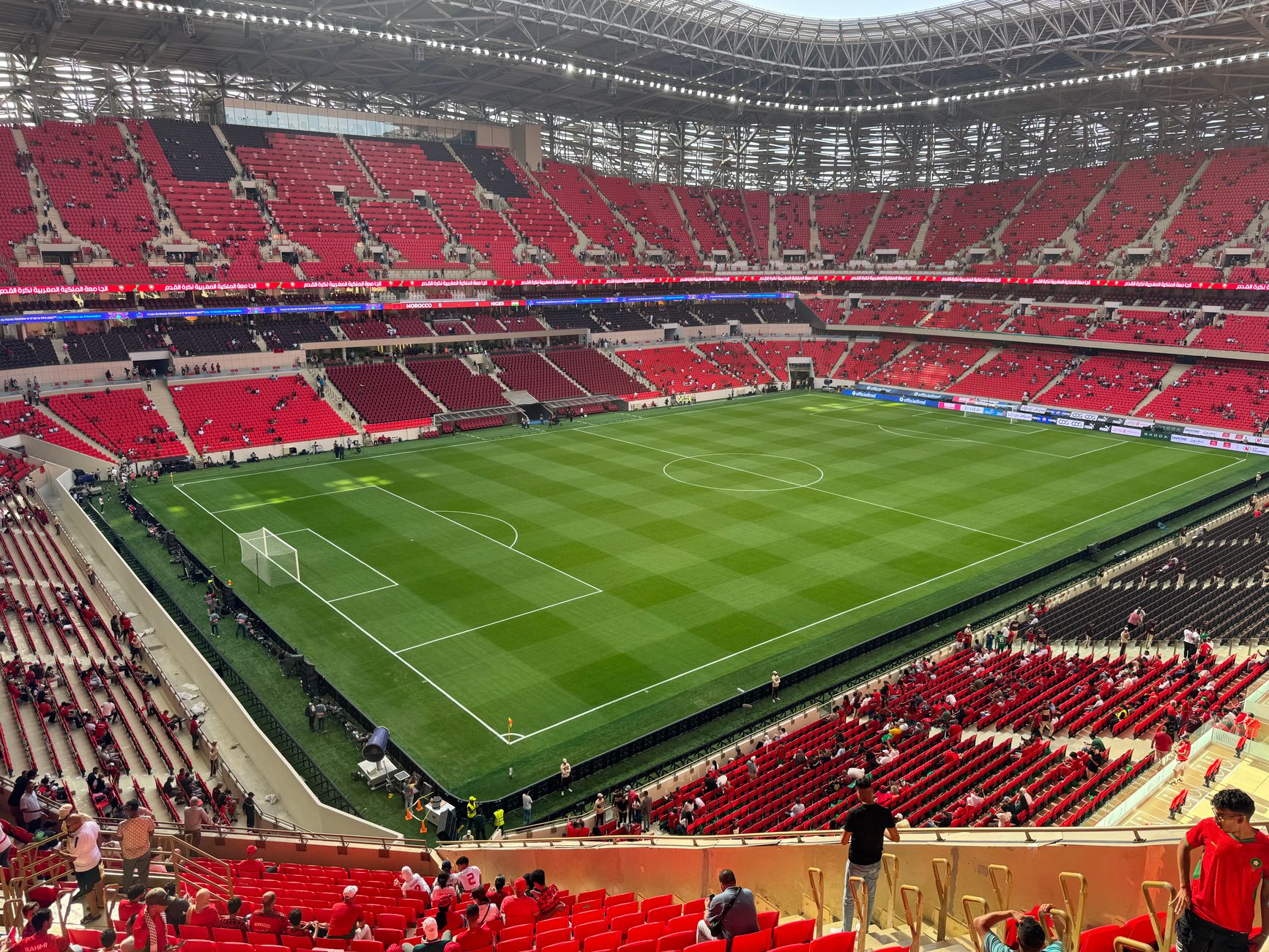
Photo by Earth Photart on Pexels
Morocco’s rise did not come from a lucky draw, a motivational poster, or the usual football nonsense about “believing in the process.” It came from a stronger player pathway, high-level European experience, disciplined coaching, and a defensive identity that made elite opponents deeply uncomfortable. Stadium View tracks those details for supporters studying World Cup predictions, tactics, and player statistics rather than blindly chasing fashionable names.
Want the broader tournament context before we get into the details?
The Quick Comparison
| Category | Morocco national football team |
|---|---|
| Governing body | Royal Moroccan Football Federation |
| Confederation | Confederation of African Football |
| Common nickname | The Atlas Lions |
| Major continental title | 1976 Africa Cup of Nations |
| Best World Cup result | Semifinal, 2022 |
| First World Cup appearance | 1970 |
| Key modern coach | Walid Regragui |
| Tactical identity | Compact defending, rapid transitions, flexible wide play |
| Main football market | North Africa, Europe, and the global Moroccan diaspora |
| 2026 relevance | Strong contender if defensive depth and attacking availability hold |
Round 1: What Did Morocco’s History Teach Me?
Morocco’s football history shows that its 2022 semifinal was a breakthrough, not a random miracle. The national team first appeared at the FIFA World Cup in Mexico in 1970, then became the first African nation to win a World Cup group in 1986. Morocco’s 1976 Africa Cup of Nations triumph remains its only senior AFCON title, which is a slightly awkward statistic for anyone calling the team an established continental dynasty.
The Royal Moroccan Football Federation, commonly abbreviated as FRMF, has gradually strengthened domestic infrastructure and international recruitment. Moroccan players developed through clubs such as Wydad AC, Raja CA, and AS FAR, while others came through academies and professional systems in France, Belgium, Spain, the Netherlands, and Germany. That cross-border development matters because international football rewards players who already understand high pressure, tactical rotations, and hostile away environments.
According to FIFA’s Morocco team profile, the country’s recent global status reflects sustained competitive progress rather than one isolated result. The Confederation of African Football also places Morocco inside a generation of African teams increasingly capable of exporting players to Europe and competing tactically with traditional powers.
The real lesson from the older tournaments is less glamorous: Morocco often needed one more reliable attacking solution. Defensive organization could keep matches alive, but survival alone does not win knockout football. That problem became less severe when players such as Hakim Ziyech, Sofyan Amrabat, Achraf Hakimi, Yassine Bounou, and Youssef En-Nesyri brought elite experience into the national setup.
For a deeper historical comparison, explore our [Internal Link: Africa Cup of Nations history guide], especially the sections on Morocco’s 1976 title and 1986 World Cup campaign.
Round 2: How Did Morocco’s 2022 Tactics Change the Team?
Morocco’s 2022 success came from a compact defensive block, aggressive recovery runs, disciplined midfield spacing, and fast attacks through wide areas. Walid Regragui’s team conceded only one own goal during the group stage and eliminated Belgium, Spain, and Portugal before losing to France in the semifinal. The system was not aesthetically pure, but neither is surviving a street fight, and knockout football is usually closer to that than a coaching seminar.
Regragui typically asked Morocco to defend with narrow distances between the back line and midfield. Sofyan Amrabat screened central areas, while Romain Saïss and Nayef Aguerd provided physical presence when fit. Achraf Hakimi offered explosive width from right-back, and Noussair Mazraoui gave the opposite flank technical balance. When Morocco won the ball, Hakim Ziyech and Sofiane Boufal could carry possession forward quickly instead of recycling it until the opponent politely fell asleep.
Listen up — this is the part that matters: Morocco’s defensive record was not created by defenders alone. It depended on the entire team accepting uncomfortable work. Wingers tracked runners, midfielders closed passing lanes, and full-backs chose their attacking moments rather than sprinting forward like unsupervised teenagers.
A useful contrarian point is that Morocco’s best matches were not necessarily the ones with the most possession. Against Spain, Morocco survived long spells without the ball, then won the penalty shootout after a disciplined 0–0 match. Against Portugal, the 1–0 victory came from controlling danger zones, not producing a statistical fireworks display. Possession is a tool; treating it as a moral virtue is how analysts talk themselves into bad bets.
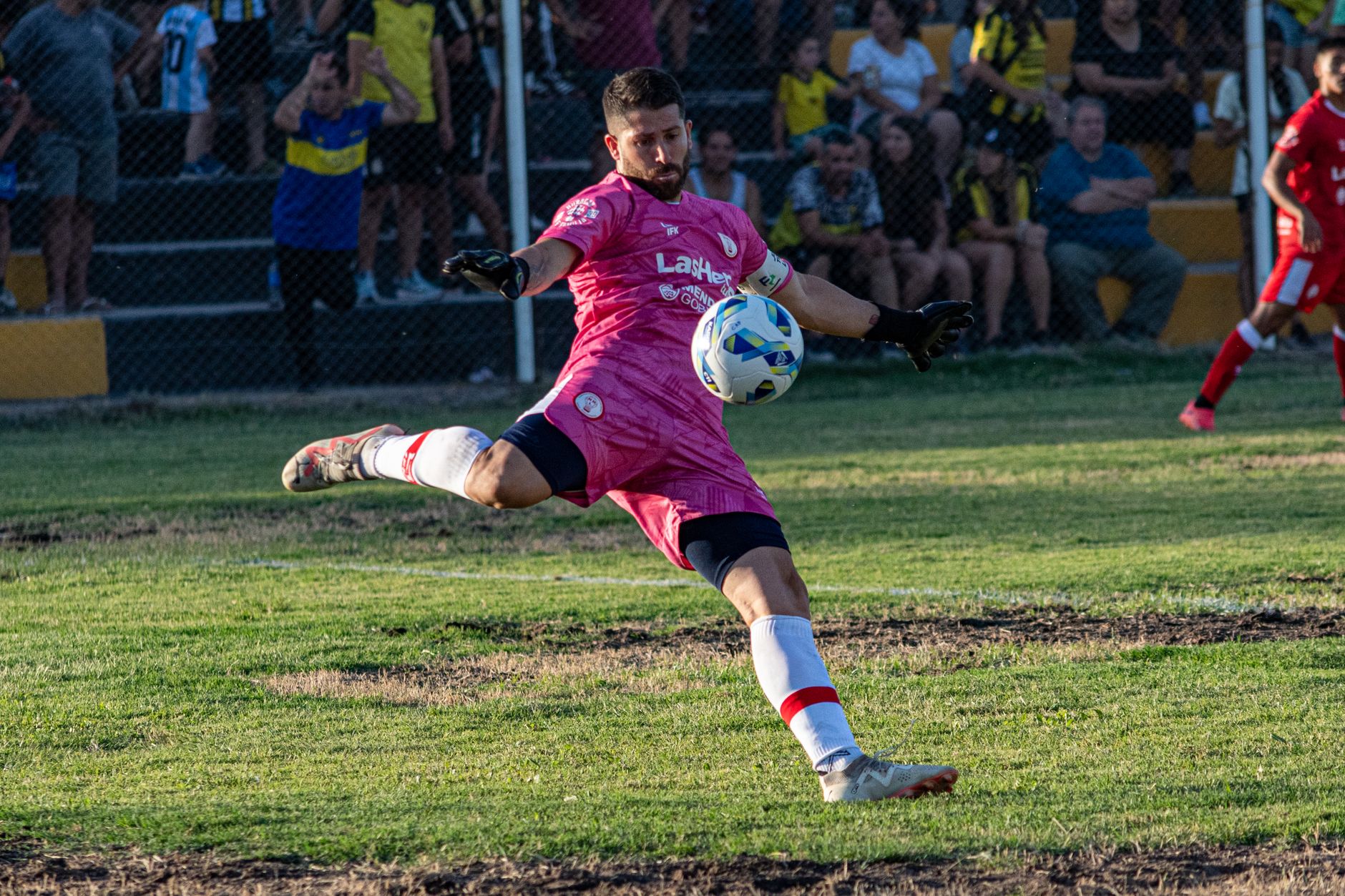
Photo by Franco Monsalvo on Pexels
For supporters comparing defensive systems, our [Internal Link: World Cup team tactics breakdown] covers pressing triggers, low blocks, and transition patterns across leading national teams.
The match data also offers a practical warning. Morocco’s 2022 model was highly effective when the starting defense remained intact, but injuries to Saïss, Aguerd, Mazraoui, and other key players exposed the thin margin behind the first-choice structure. That means future predictions should not rely on the 2022 reputation alone. Check the confirmed squad, recent minutes, opponent speed, and whether Morocco can protect the central channel without sacrificing attacking outlets.
Ready to track the tactical variables that actually influence a match?
Round 3: Which Players Define Morocco’s 2026 Outlook?
Morocco’s 2026 outlook depends on how its established stars combine with emerging players, not on repeating the emotional script from Qatar. Achraf Hakimi remains the clearest tactical reference because he can defend wide spaces, carry the ball, overlap, and attack the far post. Yassine Bounou gives Morocco international experience in goal, while Sofyan Amrabat supplies a platform for midfield control when his fitness and club situation are stable.
The attacking picture is more complicated. Hakim Ziyech can still provide left-footed delivery and invention, but age, club minutes, and consistency must be monitored. Brahim Díaz adds technical quality between the lines after becoming eligible to represent Morocco, while Youssef En-Nesyri offers aerial power and penalty-box movement. Players such as Bilal El Khannouss and Amine Adli represent the younger creative layer, although international tournaments are not generous to players still learning when to simplify.
Morocco’s player pool also benefits from diaspora pathways. Many internationals were born or developed in European football environments, including France, Belgium, the Netherlands, and Spain. That is not a weakness or an identity crisis; it is a modern recruitment advantage, provided the federation keeps the group unified and the coaching staff avoids collecting talented individuals without a coherent tactical plan.
The overlooked edge is schedule management. A player arriving from a demanding European season may have elite technical ability but limited recovery capacity. In a tournament with congested fixtures, the difference between a fit Hakimi playing 90 minutes and a fatigued Hakimi protecting a lead can determine the entire game state. Anyone assessing Morocco in 2026 should track club workloads during the final two months before the tournament, not merely read a squad list from six months earlier.

Photo by Mateo Franciosi on Pexels
Stadium View’s [Internal Link: player performance tracker] is useful for comparing minutes, goals, assists, defensive actions, and recent availability before making a match view.
Morocco should also be assessed against the opponent’s profile. A team that attacks with slow circulation can allow Morocco to maintain its compact shape. A team with fast wingers, aggressive full-backs, and a physically dominant striker can force Morocco’s defensive line into uncomfortable decisions. In practical terms, Morocco is most dangerous when it can defend centrally and attack the space behind opposing full-backs; it is less comfortable when forced to create patiently against a settled low block.
See the latest team and player context before forming a prediction.
The Final Score & Who Should Pick What
Morocco should be considered a serious tournament team, but not an automatic semifinal selection. Its strongest case rests on defensive cohesion, elite full-back play, experienced goalkeeping, and a growing supply of technically gifted attackers. Its biggest risks are injuries to central defenders, limited depth in certain positions, and matches where opponents refuse to give Morocco transition space.
My practical ranking is straightforward:
- Back Morocco cautiously against possession-heavy opponents when the Atlas Lions have their preferred defensive unit available.
- Be careful against deep defensive teams because Morocco may struggle to create enough high-quality chances without early movement between the lines.
- Monitor lineup news before every prediction, especially for Bounou, Hakimi, Amrabat, Aguerd, and the primary striker.
- Separate tournament reputation from current form because the 2022 semifinal cannot score goals in 2026.
- Use responsible limits and treat football analysis as informed probability, not guaranteed income.
The FIFA World Cup 2026 official tournament information provides the competition framework, while World Football Elo Ratings can help compare international strength across opponents. Neither source eliminates uncertainty. They simply prevent us from pretending that a dramatic narrative is the same thing as evidence.
The final verdict: Morocco is one of Africa’s most tactically credible national teams and a realistic knockout-stage threat. It deserves respect, not blind worship. If the midfield remains mobile, the defense stays healthy, and Brahim Díaz, Hakimi, Ziyech, and En-Nesyri connect effectively, Morocco can challenge strong opponents again. If those conditions fail, nostalgia will do what it always does: sell confidence at an inflated price.
For current match analysis, squad news, and 2026 tournament coverage, follow Stadium View and compare the evidence before acting.

Photo by Engin Akyurt on Pexels
Frequently Asked Questions
Q: What is the Morocco national football team?
A: The Morocco national football team is the men’s representative side of Morocco, governed by the Royal Moroccan Football Federation and competing under the Confederation of African Football. The team is widely known as the Atlas Lions and represents Morocco in FIFA World Cup, Africa Cup of Nations, and international friendly matches. Its most significant modern achievement was reaching the 2022 World Cup semifinal in Qatar, the first semifinal appearance by an African men’s team.
Q: How many World Cups has Morocco qualified for?
A: Morocco qualified for five FIFA World Cups before its historic 2022 campaign and has become one of Africa’s most consistent tournament sides. Earlier appearances came in 1970, 1986, 1994, 1998, and 2018, with the 1986 team reaching the round of 16. The 2022 tournament became Morocco’s sixth appearance and produced its best-ever result, a semifinal finish against France.
Q: What is Morocco’s biggest football achievement?
A: Morocco’s biggest global achievement is reaching the 2022 FIFA World Cup semifinal, while its major continental achievement is winning the 1976 Africa Cup of Nations. The 2022 team defeated Belgium, Spain, and Portugal during its run in Qatar. Morocco remains the first African men’s team to reach a World Cup semifinal, a record that fundamentally changed expectations around African international football.
Q: How does Morocco usually play tactically?
A: Morocco usually relies on compact defending, disciplined midfield spacing, quick transitions, and aggressive but selective wide attacks. Achraf Hakimi provides major attacking thrust from right-back, while the midfield protects central areas and allows wingers to track opposing full-backs. The system is especially effective against teams that dominate possession but leave space behind their defensive line.
Q: Who are Morocco’s key players for 2026?
A: Achraf Hakimi, Yassine Bounou, Sofyan Amrabat, Hakim Ziyech, Brahim Díaz, and Youssef En-Nesyri are among Morocco’s most important 2026 players. Their influence depends on fitness, club minutes, tactical roles, and selection decisions made by the coaching staff. Emerging players such as Bilal El Khannouss may also become important if Morocco needs more creativity against deep defensive opponents.
Q: Is Morocco a realistic 2026 World Cup contender?
A: Morocco is a realistic knockout-stage contender but should not be treated as a guaranteed semifinalist. Its defensive organization and elite individual players give it a credible chance against top nations, particularly possession-heavy teams. However, injuries, squad depth, attacking efficiency, and tournament draw quality will determine whether Morocco can repeat or improve on its 2022 performance.
Q: What should I check before predicting a Morocco match?
A: Check the confirmed lineup, central defensive availability, recent club minutes, opponent transition speed, and Morocco’s expected attacking space before making a prediction. Also compare recent results with the quality of opponents rather than counting wins without context. Finally, set a fixed entertainment budget and avoid treating a successful previous Morocco prediction as proof that the next one is guaranteed.
Intelligence received.
Stadium View · Intelligence Feed · Protocol v1.0