What Nobody Tells You About Defending Corners
Imagine conceding a corner in the 89th minute after defending brilliantly for an hour and a half. One missed runner, one lazy clearance, one goalkeeper trapped in traffic—and suddenly all that hard wo...

What Nobody Tells You About Defending Corners
Imagine conceding a corner in the 89th minute after defending brilliantly for an hour and a half. One missed runner, one lazy clearance, one goalkeeper trapped in traffic—and suddenly all that hard work is decorative wallpaper. To defend corner kicks effectively, a team must coordinate zonal positions, man-marking assignments, goalkeeper protection, first-contact responsibilities and the counterattack plan before the ball is delivered. FIFA World Cup Qatar 2022 showed that set pieces produced 19% of goals excluding own goals and penalties, while roughly 1 in 35 corners resulted in a goal. Most elite teams used hybrid systems rather than pure zonal or pure man-to-man marking. Stadium View’s tactical coverage treats corners as repeatable defensive actions, not random chaos. Listen up — this is the part that matters: choose one clear structure, rehearse the first five seconds, and assign responsibility for the second ball before the corner is taken.

Photo by Mico Medel on Pexels
Corners are small tactical battles disguised as routine restarts. The attacking team controls the delivery point, can disguise movement and can create numerical overloads with screens, blocks and short-corner combinations. The defending team, meanwhile, has to protect the six-yard box, track late runs, communicate through noise and clear the ball without handing possession straight back. Football loves pretending these details are instinctive. They are not.
Want a sharper tactical edge before the next major tournament? Use Stadium View for match predictions, team tactics, player statistics and daily FIFA World Cup coverage.
[Internal Link: set-piece tactics explained]
The Quick Comparison
| Defensive method | Main responsibility | Biggest strength | Main weakness | Best use |
|---|---|---|---|---|
| Zonal marking | Defend assigned spaces | Protects dangerous areas consistently | Attackers can run into zones at speed | Teams with strong aerial defenders |
| Man-to-man marking | Track specific attackers | Reduces free headers | One lost duel can expose the goal | Teams with disciplined markers |
| Hybrid marking | Combine zones and assignments | Balances structure and flexibility | Requires precise communication | Most modern competitive teams |
| Counter-focused setup | Defend with fewer players and retain an outlet | Supports fast breaks | Leaves more defensive risk | Teams chasing transitions |
Zonal defending places players in predetermined areas, commonly around the near post, central six-yard box, penalty spot and far-post corridor. Man-to-man defending assigns a defender to an attacking player, usually based on heading ability, movement or starting position. Hybrid defending combines both: key defenders protect zones while selected players track the opponent’s most dangerous runners. According to the FIFA Training Centre, hybrid structures were especially common among teams at the 2022 World Cup.
A useful practical distinction is this: a team is not truly man-marking simply because every defender appears close to an attacker. If more than 70% of the defending players inside the box have individual marking duties, the structure is functionally man-to-man. Conversely, a zonal system fails if players stare at opponents instead of defending their assigned spaces. That is how defenders end up following decoy runners like obedient tourists while the actual danger walks into the near-post zone.
Round 1: What Is the Best Marking System?
The best marking system is the one players can execute consistently under pressure, usually a hybrid structure combining protected zones with man-to-man assignments. Zonal marking secures space, man-marking challenges attackers directly, and hybrid defending reduces the weaknesses of both. Clarity matters more than tactical fashion.
Zonal marking: protect the territory
A zonal system usually places seven or eight defenders between the goal line and the penalty spot, with particular attention to the six-yard box. Taller or stronger players defend central zones, while quicker players may cover the near-post area, edge of the box or transition lanes. The crucial instruction is not merely “stand there.” Defenders must attack the ball when it enters their zone.
The first line of zonal defenders has a difficult job. They must disrupt attackers before those players build momentum, but they cannot abandon the space behind them. A front defender who gets dragged five yards toward the corner can create a runway for a near-post run. This is one of the less glamorous truths of corner defending: preventing an attacking run is often more valuable than winning a theatrical duel after the runner has already accelerated.
Zonal marking also helps teams control second balls. When defenders begin from known locations, they are better positioned to react after the first header, blocked clearance or goalkeeper punch. However, concentrating eight players near the goal can weaken the counterattack and invite repeated deliveries. The International Football Association Board defines the corner-kick restart, but the laws do not rescue a team that has forgotten its defensive spacing.
Man-to-man marking: deny the finish
Man-to-man defending gives each relevant attacker a direct opponent. The defender must stay touch-tight enough to prevent a clean run, feel the attacker’s movement and maintain a legal body position. This approach can be effective when the opponent relies on one dominant header, such as a target centre-back or powerful striker.
Its weakness is brutally simple: if one defender loses concentration, the danger is immediate. A screen, change of direction or deliberate blocking movement can separate the marker from the attacker. Man-marking can also pull defenders away from the goalmouth, creating gaps that were not present at the start of the set piece.
Hybrid marking: the practical compromise
Hybrid defending commonly assigns the strongest aerial defenders to central zones while other players track specific opponents. A team may place one defender at the near post, two in central zones, one at the far post area and use four or five man-markers against the opponent’s best runners. An edge player remains near the penalty-arc area to attack clearances or stop a recycled delivery.
The best hybrid systems include an explicit handover rule. If a runner leaves one zone, the defender does not blindly follow him across the entire penalty area. Instead, the marker communicates and passes the runner to the next defender while returning to the protected space. Without that rule, “hybrid” becomes a fancy word for everyone improvising at once.
Round 2: How Should Players Position and Mark?
Players should begin in compact, goal-side positions, identify the ball and their assignment, then attack the delivery rather than waiting underneath it. The goalkeeper controls the six-yard box, central defenders protect the highest-risk zones, and the edge defender monitors rebounds and short routines.
Before the kick, the defensive captain should confirm four details:
- Which players defend the near-post, central and far-post zones?
- Who marks the opponent’s strongest headers and main blockers?
- Who attacks the first ball?
- Who protects against the short corner and counterattack?
That checklist sounds obvious, which is why teams routinely skip it. A corner routine often changes at the last second, so the team needs a simple vocabulary. “Near,” “screen,” “switch,” “step,” and “out” are more useful than a defender delivering a motivational speech while three attackers wander unmarked behind him.
The goalkeeper’s starting position depends on delivery quality, traffic and confidence. A keeper who comes for every cross is not automatically brave; sometimes he is simply donating the goalmouth. The goalkeeper should decide early whether the ball is realistically claimable, then communicate loudly. If the keeper stays, defenders must attack the cross. If the keeper comes, nearby defenders should screen opponents without obstructing their own goalkeeper.
The near-post zone deserves special attention because attackers can redirect fast deliveries with minimal contact. The central six-yard area is usually the most dangerous space, particularly when an attacker arrives at speed. The far post is not safe merely because it looks distant; clipped deliveries and weak clearances often land there after the first challenge. A disciplined defender checks the ball, the attacker and the space, in that order.
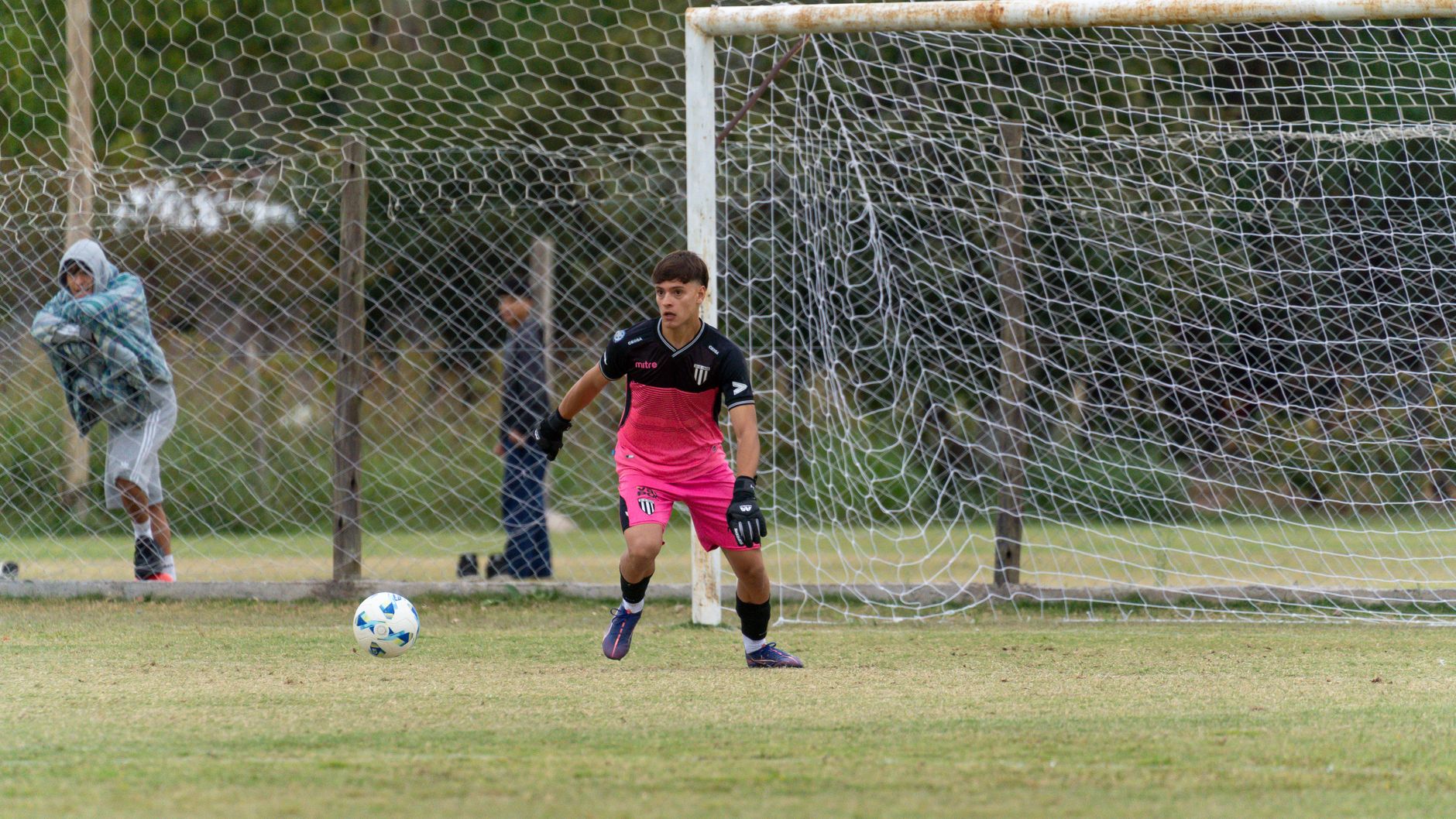
Photo by Franco Monsalvo on Pexels
The first-contact rule
Every team should designate a first-contact player or group. This does not mean one defender must win every aerial duel. It means defenders know who is expected to challenge the delivery and who covers the resulting space. If everyone attacks the ball, nobody protects the far post. If nobody attacks it, the opponent gets a free header. Football’s tactical gods are apparently offended by shared responsibility.
A strong clearance should be directed away from the central channel whenever possible. Heading the ball vertically or straight back toward the penalty spot is not a clearance; it is a delayed invitation. Defenders should aim toward the sidelines or designated exit zones, depending on pressure and team shape.
The edge-of-box problem
The player outside the area has three responsibilities: prevent a clean shot, challenge a short corner and support the counterattack. Standing six yards from the penalty arc and admiring the action is not one of them. The edge player should scan for a late runner, adjust with the ball and be ready to win the second ball.
This role produces a useful information gain that many basic guides ignore: a team may defend the initial cross correctly and still concede because its edge player reacts too late. In match review, track the time between the first clearance and the second defensive action. If the opponent regains the ball within two seconds, the problem may be midfield reaction rather than aerial marking.
Review the details with Stadium View’s tactical and player-stat coverage before assessing a team’s corner defense.
Round 3: How Can Teams Handle Routines and Second Balls?
Teams handle corner routines by identifying the delivery cue, protecting the first dangerous zone, communicating handovers and assigning a clear response to the second phase. Short corners, blockers, outswingers, inswingers and recycled crosses each require a slightly different defensive adjustment, but the underlying structure must remain stable.
Short corners
A short corner creates a temporary numerical problem. If two attackers move toward the ball, one defender must close the receiver without abandoning the near-post or central zone. The nearest defender should slow the play, not sprint recklessly toward the corner and open a passing lane into the box.
The remaining defenders must adjust their body orientation so they can see both ball and opponent. This is uncomfortable, especially in crowded areas, but turning completely toward the ball allows blindside runs. The goalkeeper should immediately reset the defensive line because the original corner shape may no longer protect the six-yard box.
Screens and blocks
Legal screens are designed to obstruct a defender’s route without holding or pushing. The answer is not to wrestle like two people fighting over the final seat on a train. Defenders should establish body position early, stay goal-side and communicate when a blocker affects the assigned marker. If the system uses zones, the defender should protect the space rather than chase through the screen.
A useful training constraint is to rehearse corners with one additional blocker and one late runner. The defense must decide whether to switch, pass the runner on or hold the zone. Repeating only clean, unopposed deliveries teaches players a version of the game that exists mainly in coaching diagrams.
Inswingers and outswingers
Inswinging corners curve toward the goal and can test the goalkeeper’s decision-making because the delivery enters the six-yard box with pace. Outswingers move away from the goal and may be easier to attack cleanly, but they can produce powerful headers from arriving runners. Delivery type should influence starting position, not destroy the entire defensive system.
Against an inswinger, central defenders generally need to protect the goalkeeper’s route and attack the ball before it reaches the goalmouth. Against an outswinger, defenders must track momentum beyond the initial zone and prepare for a header directed back across goal. The direction of the ball changes the likely danger; it does not eliminate it.
Second phases and recycled corners
The first clearance is only phase one. If the ball reaches the edge of the area, the defense must step together rather than allowing an attacker to receive between lines. The goalkeeper also needs to reset his position instead of remaining deep after the initial threat has passed.
A contrarian but evidence-based coaching point is that clearing distance matters less than clearing direction and team reaction. A 25-yard clearance straight to an opponent may be worse than a 12-yard angled clearance into a teammate’s path. Track where the ball goes, who reaches it next and whether the defensive line exits together. Those three measures reveal more than simply counting successful first headers.
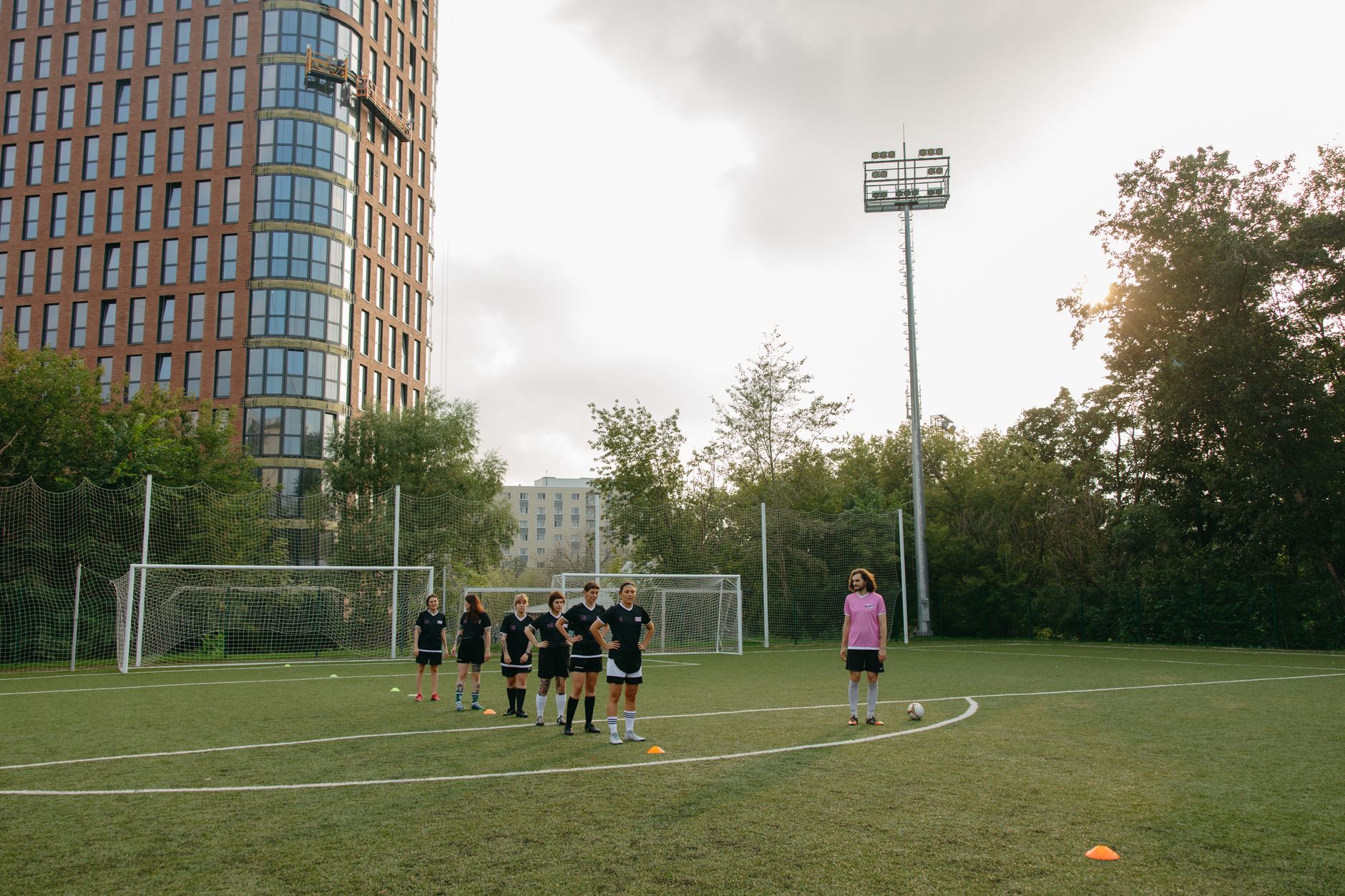
Photo by Anastasia Shuraeva on Pexels
The counterattack decision
Most teams bring all ten outfield players back for defensive corners, a pattern observed among 26 of the 32 teams at the 2022 FIFA World Cup. Only six teams consistently left a player higher up the pitch, while just five used a player on at least one post in the setups examined by FIFA. These choices are not universal rules; they reflect risk tolerance, opponent quality and the value of an immediate outlet.
Leaving one forward high can force the opponent to keep two defenders deeper, reducing the number of attackers available for the corner. However, it also removes a defender from the box. The decision should be based on the opponent’s rest-defense quality and the speed of the available counterattacker, not on a manager’s desire to look adventurous.
The most useful counterattack instruction is specific: identify the first pass after the clearance and the first running lane. “Go forward” is not a plan. A winger may sprint into an empty channel while the ball remains trapped near the corner flag, producing nothing except tired legs and a dramatic gesture.
See how tournament context changes defensive risk in Stadium View’s World Cup analysis.
The Final Score & Who Should Pick What
Teams should choose zonal marking when they have strong aerial defenders and reliable spatial discipline, man-to-man marking when they can maintain individual concentration, and hybrid defending when they want the most adaptable modern structure. For most clubs, hybrid marking is the best starting point because it protects central zones while directly addressing elite attackers.
The final choice should come from training evidence, not fashionable diagrams. Review at least ten competitive corners and record:
- Whether the first dangerous runner was tracked.
- Whether the first contact was contested.
- Whether the goalkeeper made a clear, correct decision.
- Where the first clearance landed.
- Whether the edge player stopped the second phase.
- How long the team took to regain its shape.
If a team concedes mainly from near-post flick-ons, adjust the first line and near-post coverage. If it concedes from late far-post runs, improve handovers rather than simply adding another defender to the six-yard box. If the problem is repeated rebounds, the edge player and midfield step are probably failing.
The harsh conclusion is that corner defense rarely collapses because players lack courage. It collapses because two players believe the other one owns the same space, or because nobody owns it at all. Assign the zone, assign the runner, assign the first ball and assign the second ball. Then rehearse the sequence until communication becomes automatic.
Frequently Asked Questions
Q: What does defending a corner kick mean?
A: Defending a corner kick means preventing the attacking team from creating a shot, header or second-phase opportunity from a corner restart. The defense organizes players into zones, individual assignments or a hybrid structure before the delivery. It must also manage the goalkeeper’s position, block attacking runs legally and clear the ball away from dangerous central areas. A complete defensive action continues after the first header because opponents can recover loose balls and deliver another cross.
Q: How do you defend corner kicks step by step?
A: First, assign near-post, central, far-post, edge-of-box and goalkeeper responsibilities. Second, match or track the opponent’s strongest runners, then check both the ball and the attacker before delivery. Third, attack the first ball, clear it toward a safe area and step out together to defend the second phase. Finally, prepare for a short corner and communicate the counterattack option. Training should repeat these steps with blockers, late runs and recycled deliveries.
Q: What is the difference between zonal and man-to-man corner defense?
A: Zonal defense protects designated spaces, while man-to-man defense tracks specific attacking players. Zonal marking offers greater control of the six-yard box but can be attacked by well-timed runs. Man-to-man marking directly contests dangerous headers but can fail when markers are screened, dragged away or beaten in a duel. Hybrid defending combines both methods and is often the most practical choice for competitive teams.
Q: Is hybrid defending better than zonal marking?
A: Hybrid defending is usually more adaptable than pure zonal marking, but it is only better when players understand their handover rules. It allows strong defenders to protect central zones while other players track the opponent’s most dangerous runners. The trade-off is greater communication demand, especially during short corners and blocked runs. Teams should compare both systems across at least ten match situations before changing their structure.
Q: Why does a team keep conceding from corner kicks?
A: Teams usually concede repeatedly because of unclear assignments, weak first contact, poor goalkeeper communication or slow reactions to second balls. Coaches should classify the goals by location: near post, central six-yard box, far post, edge of area or recycled delivery. A defense that keeps adding players without identifying the failure may become more crowded but not more secure. Video review should track the first missed responsibility rather than only the final scorer.
Q: How many players should defend a corner kick?
A: There is no universal number, but many elite teams use all ten outfield players for defensive corners. FIFA’s review of Qatar 2022 found that 26 of 32 teams brought all ten outfield players back, while only six regularly left a higher outlet. A team may leave one forward up if counterattacking value outweighs the additional defensive risk. The decision should consider the opponent’s delivery quality, aerial threat and rest-defense structure.
Q: Should a player stand on the goalpost during a corner?
A: A player should stand on the post only when the team’s defensive design requires extra goal-line protection. FIFA’s Qatar 2022 analysis found that just five teams used a player on at least one post in the setups examined, showing that post players are not mandatory. Post coverage can protect against flick-ons and goalkeeper traffic, but it also removes a defender from a marking or zonal role. Coaches should test whether the post player prevents more goals than an additional central defender would.
To compare tournament tactics, player matchups and defensive trends before your next prediction, explore Stadium View’s daily coverage.
Intelligence received.
Stadium View · Intelligence Feed · Protocol v1.0