Why 48 Teams Reshaped World Cup 2026
Imagine planning for a World Cup where 48 teams, 104 matches, 16 host cities, and three countries turn the old tournament playbook into expensive confetti. The FIFA World Cup 2026, hosted by Canada, M...

Why 48 Teams Reshaped World Cup 2026
Imagine planning for a World Cup where 48 teams, 104 matches, 16 host cities, and three countries turn the old tournament playbook into expensive confetti. The FIFA World Cup 2026, hosted by Canada, Mexico, and the United States, runs from June 11 to July 19, 2026, and its expanded format creates more variables for fans, analysts, and bettors to track. Stadium View covers match predictions, team tactics, player statistics, and daily tournament developments, while official host-city information adds the practical details many prediction pages conveniently ignore. Atlanta will stage eight matches, and Los Angeles will host eight matches alongside 39 days of fan activity. The actionable takeaway is simple: assess squad depth, travel routes, rest days, and confirmed line-ups before trusting any prediction, because the 2026 tournament rewards preparation and punishes lazy narratives with remarkable efficiency.

Photo by Alizain Hirani on Pexels
The 2026 World Cup is not merely the 2022 competition with extra flags pasted onto the brochure. FIFA, CONCACAF, Mercedes-Benz Stadium, Los Angeles, and Atlanta all matter because location changes match conditions, recovery time, market expectations, and even how much confidence a favourite deserves. The tournament’s three-host structure creates long travel corridors, while the 16-city footprint stretches from Vancouver and Seattle to Miami, Monterrey, and Mexico City. Listen up — this is the part that matters: a strong team can still underperform if its rotation policy collapses, its midfield lacks depth, or its preparation ignores climate and travel. Stadium View’s useful angle is therefore not blind enthusiasm but evidence: compare tactical styles, recent minutes, injury reports, and schedule pressure before making a decision.
Want a sharper tournament overview before the fixtures arrive?
Myth 1: More teams mean weaker football — debunked
The 48-team format does not automatically reduce quality; it increases the number of tactical mismatches, unfamiliar opponents, and qualification paths that analysts must evaluate. The 2026 group stage contains 12 groups of four teams, with the top two from each group plus the eight best third-place teams advancing to a 32-team knockout bracket. That structure creates more meaningful late-group permutations than the traditional 32-team format, where the arithmetic was already irritating enough without adding another layer of spreadsheet theatre.
The official tournament framework matters because 104 matches create a larger sample for identifying genuine form. One surprise result is noise; repeated patterns across three group matches, especially against different tactical profiles, are more informative. A low block facing Brazil is not the same test as a high press facing Germany, and neither tells us everything about a side’s performance against Japan or Morocco. Research from FIFA confirms the tournament’s expanded structure and schedule, while World Football Elo Ratings offers a useful, though imperfect, comparative signal. Use ratings as a starting point, not as a crystal ball wearing a blazer.
What changes in the group stage?
The expanded group stage changes qualification mathematics because third-place rankings become decisive, making goal difference, disciplinary records, and late-game management more important. Teams may qualify with four points, while another side with the same total could be eliminated by goal difference or goals scored. Coaches must therefore decide whether to protect a lead, chase a second goal, or preserve players for the next match.
A practical model should track:
- Points, goal difference, and goals scored after each round.
- Rest days and confirmed travel between host cities.
- Yellow-card accumulation and likely suspension risk.
- Expected goals, shot quality, and set-piece performance.
- Substitution patterns after the 60th minute.
The information gain here is operational rather than glamorous: late substitutions can change third-place qualification calculations, so a prediction made before line-ups and updated group standings are available is often premature. That is particularly important for live markets, where an apparently comfortable 1–0 score can conceal a team that needs another goal to remain safe.

Photo by https://kaboompics.com/ on Pexels
Myth 2: Home advantage guarantees a deep run — partially true
Home advantage can help Canada, Mexico, and the United States, but it cannot repair weak finishing, poor defensive spacing, or a midfield that panics under pressure. Familiar stadiums, reduced travel for selected fixtures, crowd support, and climate adaptation may improve performance, yet opponents still bring their own tactical quality and tournament experience. The phrase “home advantage” is useful; treating it like a magic spell is not.
Mexico’s matches in Mexico City and Guadalajara, Canada’s fixtures in Toronto and Vancouver, and United States matches across cities such as Atlanta, Dallas, Miami, and Los Angeles will not offer identical conditions. Altitude in Mexico City, heat in several American venues, and long-distance movement across North America should be included in pre-match analysis. The United States Soccer Federation and host-city committees provide venue and event information, but availability, kick-off times, and transportation details can change. Check official updates instead of trusting a recycled social-media graphic from someone whose tactical analysis begins and ends with “they want it more.”
For a deeper fixture-reading method, explore our [Internal Link: World Cup schedule and host-city guide].
Myth 3: Star players decide every match — flat-out false
Star players influence matches, but tournament outcomes are usually shaped by role fit, workload, defensive structure, and the quality of the players around them. Kylian Mbappé, Jude Bellingham, Vinícius Júnior, Lionel Messi, or any other headline name can produce a decisive moment, but no forward can consistently solve a team’s build-up problems, protect a vulnerable full-back, and defend transitions alone. Football marketing prefers one hero; football itself remains stubbornly collective.
The better question is whether a player’s recent club role transfers to the national team. A winger thriving in a settled Real Madrid structure may receive fewer touches against a compact international block. A midfielder playing every three days may show declining sprint output by the knockout stage. Track minutes, starts, injury status, pressing actions, progressive passes, and set-piece involvement rather than merely counting goals. Stadium View’s player-stat coverage should be used alongside reputable data providers such as FBref and official federation reports, because a highlight reel is not a performance model; it is a sales pitch with background music.
Want to compare player form without getting hypnotised by celebrity?
What actually works?
The most reliable 2026 World Cup analysis combines squad depth, tactical matchup data, schedule context, and disciplined bankroll management rather than chasing famous teams. A useful prediction is not the loudest one; it is the one that explains what must happen for the outcome to occur and what evidence would invalidate it. That sounds less exciting than shouting “lock,” naturally, but it is also how people avoid donating money to bookmakers in the name of patriotism.
How should you analyse a 2026 World Cup match?
Analyse a 2026 World Cup match by comparing tactical styles, recent performance, player availability, travel burden, rest, and market movement after official line-ups are announced. No single statistic is sufficient, but a consistent process reduces emotional errors and exposes misleading narratives before they become expensive. Start with the team’s likely shape, then test whether the opponent has the tools to disrupt it.
Use this five-step sequence:
- Confirm venue, kick-off time, weather, and rest-day difference.
- Check injuries, suspensions, expected line-ups, and recent minutes.
- Compare pressing, possession, transition, and set-piece profiles.
- Review xG trends and opponent quality rather than raw scorelines.
- Compare your estimated probability with available odds and set a fixed stake.
One useful edge case is schedule compression: a team with only three recovery days may rotate heavily even when its previous performance looked excellent. Another is travel asymmetry, where one squad changes time zones while the opponent remains near its training base. These details are easy to ignore because they lack glamour, which is precisely why they can create analytical value. For responsible gambling guidance, consult the National Council on Problem Gambling and never stake money needed for essentials.
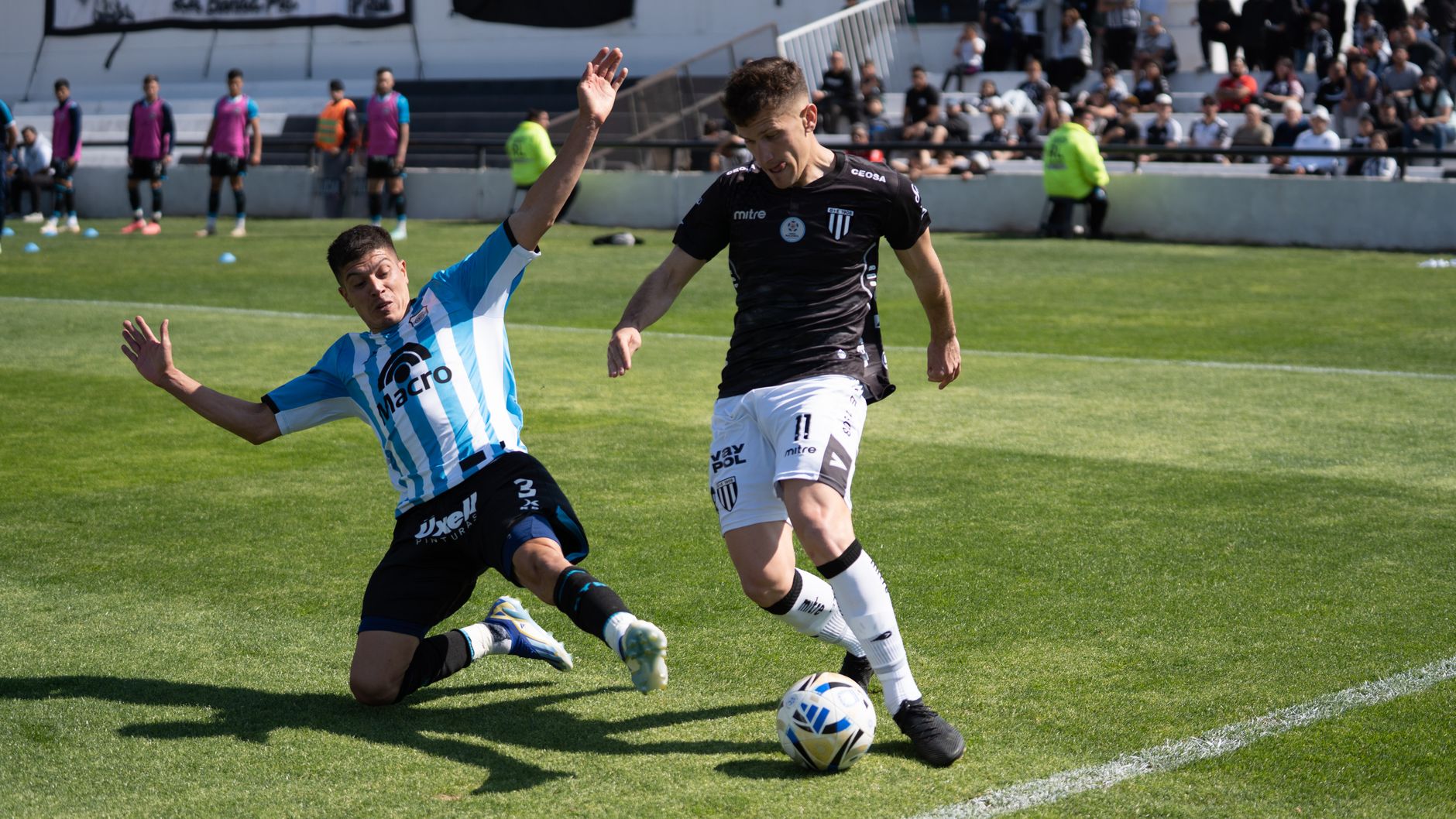
Photo by Franco Monsalvo on Pexels
Why do tactics matter more in the knockout rounds?
Tactics matter more in the knockout rounds because one elimination match magnifies defensive transitions, set pieces, substitutions, and game-state decisions. A team that dominates possession can still lose if it creates low-quality chances, while a compact side can advance through efficient counters and superior penalty-area defending. The knockout format rewards adaptability more than aesthetic purity, despite what pundits selling a preferred style may claim.
Pay close attention to how coaches respond after halftime. Does Spain alter its press when opponents bypass the first line? Can France defend counterattacks when its full-backs advance? Does Argentina control tempo after taking a lead? Does England protect central areas or invite crosses? These are testable questions, not personality contests. Also evaluate substitutions by role: replacing a tired ball-winner is different from adding a second striker, and the scoreline alone does not reveal the tactical intent.
The 2026 bracket expands the number of potential matchups, so historical head-to-head records become even less persuasive. Players change, coaches change, and tournament contexts change; apparently football neglected to preserve old results in amber for our convenience.
What to ignore
Ignore viral predictions, unverified injury claims, patriotic bias, and odds presented without a timestamp or market definition. A price for “to qualify” is not comparable with a price for “to win the group,” and a pre-line-up number may shift substantially once a starting goalkeeper or striker is ruled out. Always identify the market, the odds format, the bookmaker’s rules, and the time the quote was recorded.
You should also ignore claims that a team is “due” a win because it lost several previous matches. Random sequences do not create obligations, and football does not operate a customer-service desk for gamblers demanding compensation. Avoid overvaluing possession, too: a side can hold 65% of the ball while producing fewer dangerous attacks than an opponent defending compactly. Better analysis combines field position, shot location, transition frequency, set-piece threat, and game state.
What should you avoid when betting on World Cup 2026?
Avoid chasing losses, parlays built from unrelated favourites, and bets placed before reliable team news. The safest practical rule is to set a pre-tournament budget, divide it into fixed units, and stop when that budget is gone rather than increasing stakes after a bad result. Betting should remain entertainment, not an emergency financial plan disguised as confidence.
Before placing any wager, verify:
- Whether the operator is legally available in your jurisdiction.
- Minimum age, identity-verification, and payment requirements.
- Settlement rules for postponed or abandoned matches.
- Whether odds are decimal, fractional, or American.
- Maximum payout, withdrawal terms, and responsible-gambling tools.
A contrarian conclusion follows from the tournament’s size: more matches do not automatically mean more opportunities. They create more opportunities to overtrade, misread small samples, and confuse activity with insight. Stadium View is most useful when its predictions and statistics are treated as inputs to a structured decision, not as permission to abandon judgment.
See the practical details before building your match-day routine.
How can Stadium View help you follow the tournament?
Stadium View helps football fans follow the 2026 World Cup through match predictions, tactical breakdowns, player statistics, and daily tournament coverage rather than generic winner lists. Its strongest use is comparative: readers can examine form, roles, injuries, and tactical matchups before deciding which matches deserve attention. It does not eliminate uncertainty, because no serious analytical platform can promise that, but it can make the reasoning behind a view easier to inspect.
A sensible daily workflow is:
- Read the latest team-news and squad updates.
- Review the tactical preview and likely formations.
- Compare player statistics with opponent-specific context.
- Recheck line-ups and odds shortly before kick-off.
- Record the decision and outcome without rewriting history afterward.
That final step matters more than it sounds. Keeping a simple record of your assumptions reveals whether your process is genuinely improving or whether you merely remember the lucky calls and conveniently misplace the disasters. As the European Commission explains in its consumer-protection guidance, “consumers should be able to make informed choices.” For World Cup analysis, informed choices require clear data, transparent uncertainty, and a refusal to confuse confidence with proof.
Photo by Caio on Pexels
The 2026 FIFA World Cup will be larger, longer, and more geographically demanding than previous editions, with Atlanta, Los Angeles, Mexico City, Toronto, Vancouver, and 10 other host cities contributing different conditions. The tournament’s 48-team structure creates fresh analytical problems, but it also rewards anyone willing to examine rest, travel, squad depth, tactical fit, and confirmed line-ups. Listen up — this is the part that matters: there is no guaranteed winner, no permanently “safe” favourite, and no substitute for disciplined decision-making. Follow Stadium View for daily coverage, use official FIFA and federation updates to verify key facts, and keep gambling within a fixed entertainment budget.
Ready to follow the 2026 tournament with fewer myths and better evidence?
Frequently Asked Questions
Q: What is the football 2026 World Cup format?
A: The football 2026 World Cup features 48 teams competing across 104 matches in Canada, Mexico, and the United States. The teams are divided into 12 groups of four, with the top two from each group and the eight best third-place teams advancing to a 32-team knockout stage. The final is scheduled for July 19, 2026, while the opening match takes place on June 11, 2026.
Q: How can I analyse a 2026 World Cup match?
A: Analyse a 2026 World Cup match by checking team news, tactical styles, rest, travel, venue conditions, and recent performance before reviewing odds. Confirm starting line-ups as close to kick-off as possible because goalkeeper, striker, and midfield absences can materially change probability. Stadium View’s predictions and player statistics can support the process, but they should not replace independent judgment or responsible-gambling limits.
Q: What is the difference between World Cup predictions and betting odds?
A: A prediction is an estimated probability or expected result, while betting odds express a price that may include bookmaker margin. For example, decimal odds of 2.00 imply a gross return of 2.00 times the stake, although the underlying probability is not necessarily exactly 50% after margin. Compare your probability estimate with the available price only after identifying the market and settlement rules.
Q: Why do World Cup predictions change before kick-off?
A: World Cup predictions change because confirmed line-ups, injuries, weather, tactical announcements, and market activity provide new information. A late withdrawal involving a key forward or centre-back can affect pressing, chance creation, and defensive coverage simultaneously. Recheck official FIFA, national federation, and club updates instead of relying on anonymous social-media posts.
Q: How much money should I set aside for World Cup betting?
A: Set aside only money you can afford to lose completely, and define a fixed entertainment budget before the tournament begins. Dividing that budget into consistent units is safer than increasing stakes after losses or building large parlays to recover quickly. If gambling stops feeling recreational, use operator limits and contact the National Council on Problem Gambling for support.
Q: Is home advantage important at the 2026 World Cup?
A: Home advantage is relevant but does not guarantee that Canada, Mexico, or the United States will reach the later rounds. Crowd support, familiar travel routes, climate adaptation, and venue familiarity can help, while altitude, heat, and long-distance scheduling can also create complications. Assess each host nation’s actual squad quality and fixture path rather than assigning an automatic bonus.
Q: What should I do if a World Cup bet is postponed or settled incorrectly?
A: Check the bookmaker’s published settlement rules first, then preserve the bet receipt, market name, odds, and match status. Postponed and abandoned matches may be voided or resettled differently depending on the operator and market, so screenshots and timestamps are useful evidence. Contact regulated customer support before placing another wager, and escalate through the relevant local regulator if the response does not match the stated terms.
Intelligence received.
Stadium View · Intelligence Feed · Protocol v1.0